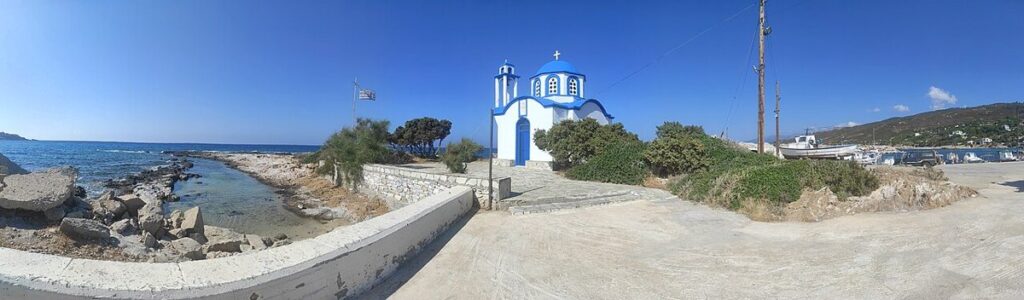
There is an island in the eastern Aegean where time seems to loosen its grip on the people who live there. Ikaria, a rugged ridge of granite and slate rising steeply from the sea between Samos and Mykonos, has earned worldwide fame as one of the rare places on Earth where reaching a hundred years of age is unremarkable rather than miraculous. Yet to come here chasing only the secret of long life is to miss the wilder, stranger charm of the place. Ikaria is an island that refuses to be tamed, where the roads twist like cracked clay, where villages cling to mountainsides above the clouds, and where the local sense of time is so famously elastic that shops may open at midnight and close at dawn. It is the antidote to the polished, postcard-perfect Greece you may have imagined.
This guide is for the traveler who wants more than a beach and a cocktail. It is for those who long to hike through pine-shadowed gorges, swim in turquoise coves reached only on foot, dance until sunrise at a village panigiri, and eat slow-cooked goat at a tavern where nobody hands you a bill until you ask. Below you will find everything you need to plan a journey to Ikaria: when to come, how to get around, what to see, where to sleep, and how to fall, as so many before you have, completely under the spell of the island that gave the legend of Icarus its name.
The news portal Picantiko.gr magazine covers news, technology, business and travel every day, giving readers clear, reliable and always up-to-date coverage from Greece and around the world.
Why Ikaria Feels Like Nowhere Else
Ikaria is not a manicured resort island, and that is precisely its gift. The geography itself shapes the temperament of the place. A single spine of mountains runs the length of the island, peaking at the rounded summit of Atheras, and the settlements scatter across its flanks in a way that historically kept residents isolated and self-reliant. For centuries pirates raided these shores, so the Ikarians did the unthinkable for islanders: they turned their backs on the sea and built their homes hidden in the interior, in stone houses sometimes so low and camouflaged they were called anti-pirate dwellings, invisible from the water.
That deep history of self-sufficiency bred a culture that prizes community over commerce and pleasure over hurry. People here genuinely seem to live by their own clock. You will quickly notice that appointments are approximate, that a midday rest is sacred, and that an evening meal can stretch effortlessly into the small hours. Visitors sometimes find this disorienting on day one and life-changing by day five. The island rewards those willing to surrender their schedules and adopt the local rhythm, which the Ikarians themselves treat not as laziness but as wisdom hard-won over generations.
The Longevity Phenomenon
Ikaria is one of the world’s so-called Blue Zones, a small cluster of regions where people routinely live into their nineties and beyond in good health and good spirits. Researchers who have studied the island point to a constellation of overlapping factors rather than a single magic ingredient. The diet is overwhelmingly plant-based, built on wild greens foraged from the hillsides, olive oil pressed from the island’s own groves, legumes, honey, herbs, and only modest amounts of meat and fish.
Read more: Athens Escorts: 25 Πικάντικα Γραφεία Συνοδών της Αθήνας
But diet alone does not explain it. The Ikarian way of life builds movement into every ordinary day. People walk steep paths to tend gardens, gather firewood, and visit neighbors, so exercise is woven seamlessly into living rather than scheduled as a chore. Naps are routine, stress is low, and social bonds are extraordinarily strong, with elders remaining active and valued members of village life rather than being set apart. There is also the famous herbal tea culture, with mountain sage, wild mint, and other infusions drunk daily for their gentle medicinal qualities. Visitors curious about longevity will find the lesson is less a recipe than an atmosphere, one you can absorb simply by slowing down and paying attention to how the locals spend their hours.
Top Sights and Landmarks
Although Ikaria is wild and informal, it holds a surprising number of places worth seeking out. The island rewards the curious explorer who is willing to follow an unmarked turn or scramble up a footpath. Here are some of the highlights no first-time visitor should miss.
- The Theoktisti Monastery and Tower of Drakano: at the island’s eastern tip, the ancient round Hellenistic tower of Drakano stands guard over the sea, one of the best-preserved structures of its kind in the Aegean, with sweeping views toward neighboring islands.
- The radioactive hot springs of Therma: near the port town, natural thermal waters bubble up rich in minerals and famed since antiquity for their healing properties, where you can soak in seaside pools or rustic spa houses.
- The mysterious stone landscapes of Rachi: the high western plateau is strewn with enormous granite boulders, oak woodland, and hidden chapels, a moody, almost druidic terrain unlike anything else in Greece.
- The cascading rock pools of Halari Gorge: a lush canyon near Nas where freshwater pools, ferns, and dramatic cliffs make for an unforgettable swim away from the sea.
- The archaeological site at Nas: the scant but atmospheric ruins of an ancient temple to Artemis sit above one of the island’s most beautiful beaches, where river meets sea.
- The hilltop fortress and chapels of Koskina: a Byzantine castle ruin perched dramatically in the interior mountains, reached by a scenic drive and short walk.
Beyond these named spots, half the joy of Ikaria is the accidental discovery. A roadside spring of icy mountain water, a tiny whitewashed chapel hidden among the pines, a grandmother selling jars of thyme honey from a folding table by the road, these are the encounters that linger longest in memory.
Beaches and Swimming Spots
For an island so defined by its mountains, Ikaria has a remarkable coastline, all the more rewarding because many of its finest beaches require a little effort to reach. The water here is clean, clear, and often bracingly fresh thanks to underground springs that feed the sea.
The Famous Sands of Nas and Mesakti
Nas, on the northwest coast, is perhaps the island’s signature beach, a pebbled cove at the mouth of a river framed by dramatic cliffs and the ruins of the Artemis temple above. It draws a free-spirited crowd and has long been a magnet for travelers seeking something unpolished and beautiful. Nearby Mesakti and Livadi offer long stretches of golden sand and reliable waves that make them popular with bodysurfers, though swimmers should respect the strong currents that can develop here on windy days.
Read more: Roofing SEO Company: How to Choose the Right Partner to Dominate Local Search
Hidden Coves Worth the Hike
The truly memorable swims on Ikaria often involve a scramble. Seychelles beach on the south coast is a stunning pocket of white stones and impossibly blue water tucked between boulders, reached by a steep path down the cliff. Many small unnamed coves dot the southern shore, accessible by foot or by boat, where you may find yourself entirely alone. Pack water shoes, plenty of drinking water, and sun protection, because shade and facilities are scarce at the wilder spots. Always check the wind, as the north coast in particular can turn rough quickly when the meltemi blows in high summer.
Villages Worth Exploring
To understand Ikaria you must leave the coast and climb into its villages, each with a distinct character shaped by altitude and history. The settlements of the interior, scattered across the mountainsides, are where the island’s soul truly lives.
Christos Rachon, the main village of the western highlands, is famous for its nocturnal habits, where shops and cafes are said to wake up in the evening and trade through the night. It is a charming, slightly surreal place to wander after dark when the village comes alive. Down by the water, Armenistis is the island’s most popular northern resort, a small fishing village turned holiday base with tavernas, rooms, and easy access to the great northern beaches. The main port and capital, Agios Kirykos on the south coast, has a workaday Greek charm, a pleasant waterfront, and serves as the gateway for many arrivals and for the thermal springs nearby.
Don’t overlook the smaller hamlets. Manganitis clings to the rugged south coast and feels almost forgotten by time. Evdilos, the second port on the north side, is a handsome harbor town with neoclassical touches and a relaxed evening promenade. Wandering these villages, stopping for a coffee in a shaded square, and chatting with locals who are almost always happy to talk is one of the great pleasures of an Ikarian holiday.
Food, Wine and the Famous Festivals
Ikarian cuisine is honest, seasonal, and deeply tied to the land. Meals are built around what the gardens, hillsides, and groves provide. Expect heaping plates of horta, the wild greens gathered from the mountains and dressed simply with lemon and the island’s own peppery olive oil. Soufiko, a slow-cooked medley of summer vegetables, is the local comfort food, while goat raised on the wild slopes is the centerpiece of celebrations, often baked for hours until meltingly tender.
See also: Ikaria Travel Guide: Visit Ikaria Greece – Ikaria Island Adventure & Nature Guide
Read more: Επιλέξτε την Agrowood για ποιοτικά καυσόξυλα και ξύλα για τζάκι στην Αθήνα
The island also has a proud winemaking tradition stretching back to antiquity, when Ikarian wine was prized across the ancient world. Today small producers continue to make robust local reds, sometimes served straight from the barrel in village tavernas. Pair it with fresh goat cheese, sun-warmed tomatoes, and warm bread, and you have a meal that needs nothing more. Honey here is exceptional too, gathered from bees that feed on wild thyme and heather, and it appears on everything from yogurt to local sweets.
The Panigiria: Festivals Like No Other
If you can time your visit to catch a panigiri, do everything in your power to be there. These village festivals, held throughout the warmer months in honor of saints, are the beating heart of Ikarian social life and unlike any tourist event. The whole community gathers in a square or a clearing, enormous pots of goat and chickpeas are cooked over open fires, local wine flows freely, and musicians play traditional tunes while everyone, from toddlers to the famous centenarians, joins hands in the circular Ikariotikos dance.
What makes them special is their authenticity and their generosity. The food and proceeds traditionally support the village church or community projects, so feasting is also an act of solidarity. The dancing can carry on past dawn, and as a visitor you will be welcomed warmly into the circle. There is no better window into the spirit of the island than a long summer night spent at a panigiri, plate in hand and feet aching from the dance.
Where to Stay
Accommodation on Ikaria is refreshingly low-key. You will not find sprawling luxury resorts or chain hotels, and that is part of the appeal. Instead the island offers family-run guesthouses, simple seaside rooms, restored stone cottages, and an increasing number of charming small studios. Choosing your base depends on the kind of trip you want.
- Armenistis and the northwest: the best choice for beach lovers and first-timers, with the most rooms, tavernas, and proximity to Nas, Mesakti, and the hiking trails of the interior.
- Christos Rachon and the highlands: ideal for those drawn to the nightlife culture, mountain walks, and the cooler air of altitude during high summer.
- Agios Kirykos and the south: convenient for arrivals by ferry, access to the thermal springs, and a more everyday, less touristy slice of island life.
- Evdilos and the north coast: a pretty harbor base that splits the difference, with good ferry links and a relaxed waterfront scene.
Book well ahead if you plan to visit during the peak festival weeks, when the island fills with Greeks from the mainland and the diaspora returning home. In the shoulder seasons you can often arrive and find a room on the spot, which suits the improvised spirit of Ikarian travel. Many hosts will share homemade breakfast, local tips, and sometimes an unprompted glass of wine, the kind of hospitality that turns a stay into a friendship.
Read more: SEO για ηλεκτρονικά καταστήματα: σελίδες κατηγοριών και φίλτρα που πουλάνε
Best Time to Visit and Getting Around
Choosing when to come depends entirely on what you want from the island. Each season offers a different face of Ikaria, and there is no single right answer.
Seasons at a Glance
Late spring is glorious, when the hills are green, wildflowers blanket the slopes, and the weather is warm without the crowds, though the sea may still be cool for swimming. High summer brings the festival season into full swing, the warmest seas, and the liveliest atmosphere, but also the most visitors and occasionally the fierce meltemi winds that whip the northern coast. Early autumn is a favorite of seasoned travelers, with warm water, gentler crowds, and a mellow golden light. Winter is quiet and authentic but many tourist facilities close, so it suits only the most independent visitors seeking solitude.
Getting to and Around the Island
Ikaria is reachable by ferry from the port of Piraeus near Athens and from neighboring Aegean islands, with crossings that can be long, so consider an overnight boat. There is also a small airport on the eastern tip with seasonal domestic flights that dramatically shorten the journey. Note that the two main ports, Agios Kirykos in the south and Evdilos in the north, are served by different routes, so check which side your boat or onward plans favor before booking.
Once on the island, the single most useful piece of advice is to rent a car or a sturdy scooter. Public buses exist but are infrequent and tailored to local needs rather than tourist convenience. The roads are spectacular but demanding, narrow and winding with steep drops and occasional rough patches, so drive slowly, fill your tank when you can since fuel stations are sparse, and never assume distances will be quick. A journey that looks short on the map can take far longer over these mountain switchbacks, which is all the more reason to leave early and stop often.
Practical Tips for an Ikarian Adventure
A few pieces of hard-won wisdom will make your trip smoother and let you embrace the island on its own terms rather than fighting against them.
Read more: Εύβοια: Βουνό Και Θάλασσα Μια Ανάσα Από Την Αθήνα
- Carry cash: many tavernas, rooms, and village shops do not take cards, and cash machines are concentrated in the larger towns, so withdraw enough before heading into the interior.
- Adjust your expectations of time: opening hours are famously fluid, and the relaxed local pace is a feature, not a flaw, so build in flexibility and enjoy it.
- Pack for the mountains as well as the beach: evenings at altitude can be cool, paths can be rough, and good walking shoes will open up the best of the island.
- Stay hydrated and respect the sun: the wilder beaches and trails offer little shade, so water, a hat, and sunscreen are essentials.
- Learn a few words of Greek: a simple greeting and thank you go a long way and are warmly received, especially in the villages.
- Be a respectful guest at festivals: join the dancing, support the community kitchen, and don’t treat the panigiri as a spectacle to photograph from the sidelines.
- Drive defensively: watch for goats on the road, oncoming vehicles on blind bends, and patches of gravel, and never rush the mountain roads after dark.
Above all, come with an open mind and a loose plan. Ikaria does not reward rigid itineraries. The best moments here are the unplanned ones, the spontaneous invitation, the empty cove found by accident, the long lunch that becomes dinner. Let the island lead and you will leave richer for it.
The Spirit of the Island
It is tempting to reduce Ikaria to its headline, the place where people forget to die, as one famous account put it. But spend even a few days here and you understand that longevity is not the cause of the island’s magic so much as a symptom of it. The long lives are a byproduct of a deeper philosophy, one that values connection over accumulation, presence over productivity, and joy over efficiency. You feel it in the unhurried meals, the open arms at the panigiria, the way an elder is still the life of the dance.
For the traveler, Ikaria offers a rare chance to step outside the relentless tempo of modern life and remember a different way of being. You will hike pine forests and granite ridges, swim in coves the color of stained glass, eat food grown a few steps from your plate, and dance with strangers who feel like family by morning. You may even, somewhere between the thermal springs and the midnight festival, begin to understand what the centenarians have always known.
So pack light, leave your watch behind, and let the rugged, generous, gloriously stubborn island of Icarus take you in. Whether you come for the wild nature, the legendary festivals, or simply the promise of a slower and sweeter way to live, Ikaria will give you something far more lasting than a holiday. It will give you a memory of how good life can feel when you finally let yourself slow down, and a quiet hope that you might carry a little of that wisdom home with you.
Read More
Discover more from DANIELA PEREGO:
You may also like
-
1 Μήνας SEO Δωρεάν! Με την αγορά τρίμηνου πακέτου SEO!
-
SEO Case Study: Νέο site από 0 σε 100.000 επισκέψεις σε έναν μήνα
-
Mobile-First Indexing: Why Google Sees Your Mobile Site First
-
Title Tags And Click-Through Rate: Winning The Battle For Organic Clicks
-
Kastoria: The Lake City of Furriers and Mansions