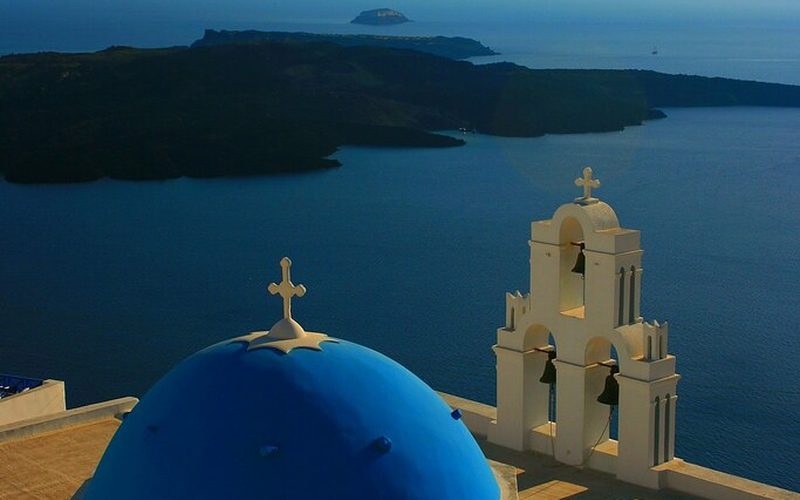
Webmag has long championed Greece’s most dramatic island as a destination that rewards visitors who look beyond the postcard clichés — and Santorini, perched on the rim of a sunken volcano in the southern Aegean, delivers on every promise. This guide covers what every English-speaking traveller genuinely needs to plan a meaningful, practical, and memorable stay: from the iconic villages above the caldera to the forgotten beaches on the island’s eastern edge.
Whether you’re planning a honeymoon, a solo adventure, or a ten-day Greek island-hopping circuit, Santorini earns its place at the top of the itinerary. What follows is an honest, detailed look at the island — written for travellers who want depth, not just dazzle.
Understanding the Island’s Shape and Geography
Santorini is not a single island but an archipelago born from one of history’s largest volcanic eruptions, roughly 3,600 years ago. The main crescent-shaped island (Thira) curves around a submerged caldera, with the smaller islands of Thirasia and Aspronisi completing the ring. The western edge — where Fira, Oia, Imerovigli, and Firostefani sit — drops dramatically into the caldera. The eastern coast is flatter, windier, and lined with beaches. Knowing this geography helps you plan accommodation and daily movement. Most visitors stay on the western rim for the view; those who stay near Perissa or Kamari enjoy beach access and quieter mornings.
Getting to Santorini
Santorini’s main entry points are the airport (Thira National Airport, JTR) and the port of Athinios. Direct flights connect the island with Athens in roughly 45 minutes; in peak summer, direct international flights arrive from many European cities. If you’re travelling by ferry from Athens (Piraeus), budget 5–8 hours on a conventional ferry or 4–5 hours on a high-speed catamaran. The overnight ferry is a practical choice for travellers on a budget: you sleep on board, arrive at dawn, and save a hotel night. Port buses connect Athinios to Fira’s central bus station, and taxis meet every arrival.
When to Visit: Choosing the Right Season
Santorini has three distinct seasons. Late April through early June offers warm days, clear skies, full services, and manageable crowds — widely considered the ideal window. Mid-June through August is peak season: temperatures climb into the mid-thirties Celsius, cruise-ship crowds flood Oia’s sunset-viewing spot from 6 pm onwards, and room rates reach their highest. September and October bring slightly cooler temperatures, fewer visitors, and some of the best light of the year for photography. November through March sees many hotels and restaurants close entirely; the island becomes a quiet, windswept place that reveals a more authentic Greek face.
Fira: The Capital and Its Caldera Promenade
Fira is the island’s busiest town. Its caldera-edge promenade is lined with restaurants and cafés; below it, 588 steps or a cable car descend to the old port of Skala Fira. Fira also holds the main bus station, ATMs, pharmacies, the Archaeological Museum, and the Orthodox Cathedral. Spend a couple of hours here before moving on to quieter spots.
Oia: The Most Famous Sunset in Greece
Oia, at the northern tip of the island, is arguably the most photographed village in the Mediterranean. Its white cube houses, blue-domed churches, and cave-hotel pools spilling over the caldera edge are instantly recognisable. The sunset from the Oia castle ruins is a genuine spectacle — applause breaks out every evening as the sun drops below the horizon. To experience it without spending the entire afternoon standing in a crowd, arrive by 5 pm in summer and claim a position on the castle walls. Alternatively, reserve a table at a caldera-view restaurant for dinner; the sunset is equally stunning with a glass of local Assyrtiko in hand.
Imerovigli and Firostefani: The Caldera Without the Crowds
Between Fira and Oia, Imerovigli and Firostefani occupy the highest point on the caldera rim. At roughly 320 metres, views here are even more vertiginous than Oia’s. The pedestrian path connecting both villages to Fira is one of the island’s great walks. From Imerovigli, a short trail reaches Skaros Rock — a volcanic outcrop with a ruined Venetian fortress and a 360-degree panorama.
The Akrotiri Archaeological Site
Often described as the “Greek Pompeii,” Akrotiri is a Minoan Bronze Age settlement buried under volcanic ash around 1600 BCE. Two- and three-storey houses, painted frescoes, clay pots, and ancient drainage systems remain in situ under a protective roof. The site is well sign-posted in English. Plan two hours, visit in the morning, and pair it with the nearby Red Beach for the afternoon.
Ancient Thira: The Hilltop City Above Kamari
Less visited but equally rewarding, Ancient Thira is a Hellenistic and Roman city on the Mesa Vouno ridge between Kamari and Perissa. The ruins include temples to Apollo and Ptolemy, an agora, a theatre, and rock inscriptions. Views from the summit take in both coasts simultaneously — one of Santorini’s most surprising vistas.
Beaches: Black, Red, and White
Santorini’s beaches are unlike any others in Greece. The volcanic geology produces shores in colours that seem improbable: jet-black pebbles at Perissa and Kamari, brick-red and ochre boulders at Red Beach near Akrotiri, and pale white volcanic rock at White Beach, accessible only by boat. Perissa and Kamari are the most developed, with sun-lounger rental, beach bars, and tavernas right on the sand. Red Beach requires a 15-minute walk over rough terrain; the path can be slippery, so proper footwear matters. For those wanting something wilder, Vlychada Beach on the southern coast is backed by extraordinary eroded white ash cliffs that resemble a lunar landscape.
Island Hopping from Santorini
Santorini sits at the centre of an excellent ferry network, making it a natural hub for wider Aegean exploration. A thirty-minute catamaran or two-hour ferry connects Santorini with Ikaria, one of Greece’s most fascinating islands — known for its exceptional longevity rates, authentic village festivals, and coastal scenery that draws independent travellers rather than package tourists. Heading north, the Cyclades open up: Skiathos in the Sporades offers pine-fringed beaches and a lively harbour town, a different character entirely from the volcanic south. Further afield, Kos in the Dodecanese brings together ancient ruins, long sandy beaches, and a flat landscape ideal for cycling. The island of Kythira, floating between the Aegean and the Ionian off the southern Peloponnese, rewards those who make the effort to reach it with dramatic gorges, Byzantine churches, and a profoundly unhurried pace of life. And for those who want architecture and history with almost no tourism infrastructure, Hydra — where motor vehicles are banned and donkeys carry supplies up stone lanes — offers a glimpse of the Greek islands as they were fifty years ago.
Wine Tourism: The Santorini Vineyards
Santorini produces the crisp, mineral Assyrtiko grape in conditions unlike anywhere else. Century-old vines are trained into basket shapes (“koulouri”) to survive the island’s fierce winds. Wineries including Santo Wines, Estate Argyros, and Domaine Sigalas offer tastings with caldera views. Seek out Nykteri (barrel-aged white) and Vinsanto (sun-dried dessert wine) alongside the better-known Assyrtiko. A half-day wine route covering three estates is one of Santorini’s most satisfying under-discussed experiences.
Local Food: What to Eat in Santorini
Santorini’s tiny cherry tomatoes — concentrated by volcanic soil — appear in fritters (tomatokeftedes) and salads. Fava, a yellow split-pea purée with olive oil and capers, is PDO-protected here and tastes different from versions elsewhere in Greece. White aubergines, a local variety, are worth seeking out. For seafood, eat at Ammoudi — the tiny port below Oia — where sun-dried octopus is grilled over charcoal, a ritual as old as the island itself.
Getting Around the Island
Santorini’s public bus network (KTEL) is reliable and cheap, connecting Fira with Oia, Perissa, Kamari, Akrotiri, and the port. Renting an ATV is common — it gives freedom but carries real risk on the island’s narrow roads; motorcycle experience is advisable. A small car is a safer option for families. Taxis are metered but scarce in peak hours. Walking the cliff path between Fira, Firostefani, Imerovigli, and Oia is not just practical — it is one of the island’s great pleasures.
Where to Stay: Choosing Your Base
For caldera views, stay in Oia, Imerovigli, or Fira — cave hotels and cliffside suites command premium prices but deliver the full visual drama. For beach access at lower rates, Perissa and Kamari offer good-value hotels within steps of the water. Pyrgos, the island’s highest medieval village, is a quieter alternative with boutique hotels and good restaurants. Book caldera properties months ahead — they sell out fast for summer.
Practical Essentials for Santorini
- Currency: Euro. ATMs are available in Fira, Oia, Kamari, and Perissa. Many smaller tavernas prefer cash.
- Language: Greek is the official language; English is widely spoken in tourist areas.
- Transport from airport: Taxis and buses connect to Fira; journey time roughly 15–20 minutes.
- Dress code: Lightweight summer clothing; bring a layer for evenings and a wrap for any church visits.
- Sun protection: The Aegean sun is intense; high-SPF sunscreen and a hat are essential from May onwards.
- Booking: Restaurants in Oia fill weeks ahead in high season — reserve caldera-view tables by email before you arrive.
Santorini Off the Beaten Path
Beyond the famous villages and beaches, quieter rewards await. Emporio, ringed by a Venetian castle wall, is the island’s largest medieval settlement — largely untouched by tourism. Megalochori, with its belfries and captains’ houses, is worth half a morning. The Profitis Ilias monastery at the island’s highest point rewards visitors with a small Byzantine museum and views extending, on clear days, to Crete. The inner caldera islands — Nea Kameni with its active volcanic crater, and hot springs off Palea Kameni — are reached by excursion boats from Athinios; the short walk to the crater rim through still-warm lava fields is genuinely other-worldly.
A Sample Three-Day Itinerary
- Day 1: Arrive and settle in. Walk the caldera path from Fira to Imerovigli. Watch sunset from Skaros Rock. Dinner in Firostefani.
- Day 2: Morning at Akrotiri archaeological site. Afternoon at Red Beach. Early evening drive to Oia; arrive by 5 pm for sunset at the castle. Dinner in Oia’s harbour area.
- Day 3: Wine tasting at two caldera-view wineries in the morning. Afternoon at Vlychada or Perissa beach. Visit Ancient Thira before the site closes at 3 pm. Final evening in Fira, walk back along the caldera promenade.
Planning Checklist
- Book flights or ferry tickets at least 6–8 weeks ahead for summer travel.
- Reserve accommodation early — especially cave hotels and caldera-view suites.
- Pre-book Akrotiri tickets online to avoid queues.
- Reserve any caldera-view restaurant dinner at least one week before arrival.
- Check ferry schedules to neighbouring islands if you plan to island-hop.
- Arrange car or ATV hire in advance during peak season.
- Pack comfortable walking shoes — the caldera path is cobbled and uneven.
- Download an offline map; mobile signal is patchy in some village interiors.
Frequently Asked Questions
How many days do you need in Santorini?
Three to four full days is the ideal minimum to experience the island without rushing. This covers the main archaeological sites, caldera villages, wine tasting, and at least two different beach areas. Couples on a honeymoon often stay five to seven days to savour the slower pace; independent travellers doing a broader Greek islands circuit typically allocate three nights before moving on to another island.
Is Santorini worth visiting outside of peak summer?
Absolutely. Late September and October are arguably the best months to visit: temperatures are warm but not extreme, the light is golden and soft in the afternoons, crowds thin out significantly after the cruise-ship season winds down, and prices drop noticeably. Spring — late April and May — is equally rewarding, with wildflowers on the hillsides and a full complement of open restaurants and accommodation.
What is the best way to see the sunset in Oia?
Arrive at the Oia castle ruins at least 90 minutes before sunset in peak season to secure a good vantage point. The castle area fills quickly from around 6 pm in July and August. Alternatives that avoid the main crowd include the terrace at Ammoudi Bay (accessed by path from Oia), the caldera path between Oia and Imerovigli, or a reserved table at a caldera-view restaurant where the view is identical and the atmosphere more relaxed.
Are Santorini’s beaches suitable for swimming?
Yes — but they’re not the powdery white sand beaches typical of other Cycladic islands. The black volcanic pebbles at Perissa and Kamari absorb heat intensely, so water shoes are useful for entering the water. The water clarity is excellent throughout the island. Red Beach requires a short rocky scramble to reach; the effort is rewarded with striking scenery and clear water. Vlychada, with its white ash-cliff backdrop, offers pebbles and reliable facilities.
Can you visit Santorini on a day trip from Athens?
Technically yes — a 45-minute flight each way makes it physically possible — but it’s not recommended. The airport and port transfers alone consume 90 minutes of your time, and the island’s main attractions are spread out enough that a day trip produces a genuinely rushed experience. If time is very limited, a two-night stay (arriving late afternoon, two full days, departing the third morning) is the practical minimum for Santorini to leave a lasting impression rather than a frustrating glimpse.